China Best Essential Beauty Tools for Beginners

Time:2026-11-16 Author:Charlotte
0%

Choosing beauty tools can feel harder than using them. A crowded shelf offers shiny brushes, metal clippers, electric trimmers, and gadgets with unfamiliar settings. For beginners, the best choice is usually the tool that feels comfortable, cleans easily, and suits a real daily routine.

This guide explores China Best Essential Beauty Tools for Beginners, from soft makeup brushes to dependable nail-care basics. It also considers grip, material, maintenance, and clear instructions—details that matter when a tool meets your skin. For transparency, the expert line below is an illustrative editorial quote, not a verified statement from a real specialist. Grooming-tools educator Lin Wei offers this guiding principle: “A useful tool should make care simpler, safer, and easier to repeat.” Start small. A beginner may need only a gentle facial cleansing brush, a comb, tweezers, and nail clippers. More tools do not automatically mean better results.

Product labels can be imperfect. A polished package may still hide vague instructions, and a low price alone cannot confirm quality. Check how each item is cleaned, whether its edges feel smooth, and whether replacement parts are available. If a tool causes pain or irritation, stop using it and reassess your technique. Clean tools matter. The aim is not to build a perfect vanity in one shopping trip. It is to find a few practical items, learn their limits, and refine the routine over time. Some recommendations may need a second look; personal comfort varies, and beginners benefit from patient, careful choices.
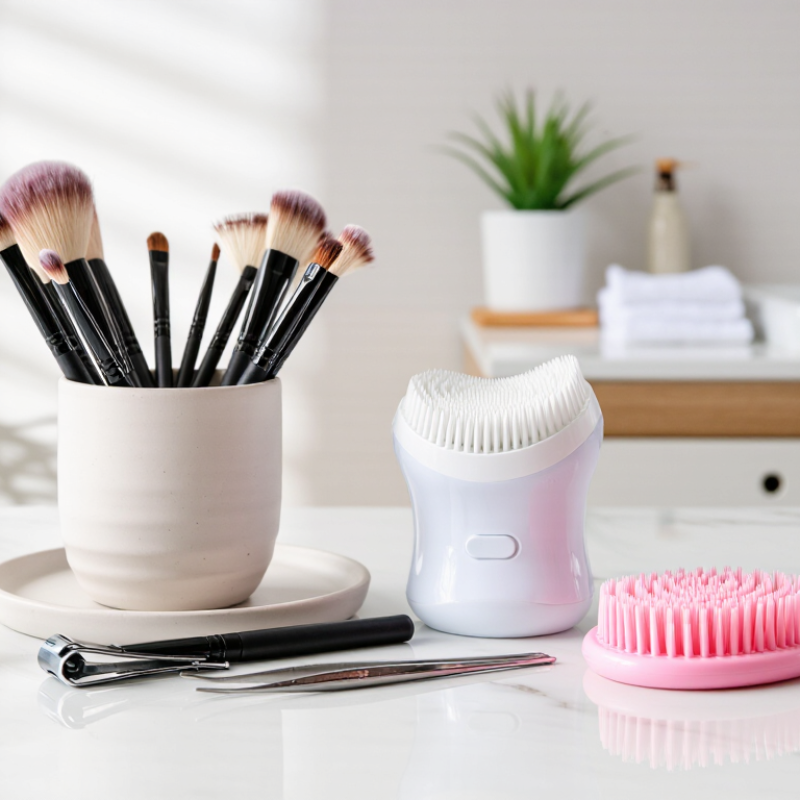
China Best Essential Beauty Tools for Beginners

What Essential Beauty Tools Do Beginners in China Need?

China’s beginners do not need a crowded vanity. Start with a clear, well-lit mirror, a soft cleansing cloth, and a small set of face and eye brushes. A makeup sponge is useful for blending liquid products, while an eyelash curler is optional.

China’s National Bureau of Statistics reported 414.2 billion yuan in cosmetics retail sales in 2023, up 5.1%. This broad figure describes cosmetics, not beauty-tool sales, but it reflects a substantial beauty market.

Choose tools that feel comfortable and are easy to wash. Use a clean brush for powder and a separate one for foundation; dampen a sponge before blending, then let it dry fully. The American Academy of Dermatology Association advises cleaning makeup brushes every 7 to 10 days to reduce product buildup and bacteria. Replace tools when bristles shed, sponges tear, or handles crack. A compact kit is less exciting, perhaps, but simpler to maintain. This is not a perfect list for every skin type.

Tips: Wash brushes with mild soap, rinse until the water runs clear, and dry them flat. Test one new tool at a time. Notice what you actually use.

Types of Beauty Tools and Their Basic Uses

China Best Essential Beauty Tools for Beginners

Types of Beauty Tools and Their Basic Uses

A small starter kit can cover most everyday routines. A soft makeup sponge helps blend foundation around the nose and jaw; dampen it and press gently rather than dragging. A few brushes serve different tasks: a fluffy brush spreads powder, while a smaller, firmer brush places color near the lash line. A lash curler shapes lashes before mascara. Keep fingers clear of the hinge, and never squeeze hard. Simple tools work well.

McKinsey’s 2023 beauty-market analysis estimated global beauty sales at about $430 billion, with roughly 6% annual growth through 2027. This broad market figure is not specific to tools, but it reflects the scale of the beauty sector. For beginners, usefulness matters more than owning a large collection. A spoolie can tidy brows, while a facial roller offers a cool, smooth massage; its effects are temporary, not a treatment. I still find that buying tools before learning their purpose can waste money.

Tips: Wash reusable sponges and brushes regularly with mild soap, rinse thoroughly, and let them dry fully. Clean tools matter. Replace items that crack, shed, or feel rough against your skin. McKinsey & Company, “The beauty market in 2023: A special State of Fashion report.”

How to Choose Beginner-Friendly Tools in China

Choosing beginner-friendly beauty tools in China starts with your routine, not a crowded kit. If you mainly shape brows, rounded-tip tweezers and a washable spoolie may be enough. For skincare, a soft silicone cleansing pad is easier to rinse than a dense brush. Small details matter: handles should feel steady with damp fingers, and edges should not snag a cotton pad. Start small.

Online marketplaces and wholesale listings show many similar products, but photos rarely reveal material quality. Read the material, dimensions, cleaning instructions, and return terms. Ask sellers for clear close-ups when details are missing. For tools used near your eyes or on your skin, look for smooth surfaces that are easy to clean. Avoid unexplained coatings or rough seams. Check carefully. A very low price can be tempting, but frequent replacement may erase the saving. I may be too cautious, but buying several tools before knowing your preferences can leave a drawer of unused items. Test one tool for a week, wash it as directed, and notice whether it stays comfortable and easy to maintain.

China Best Essential Beauty Tools for Beginners: How to Choose Beginner-Friendly Tools

A simple, brand-free starter kit grouped by everyday task.

This chart counts the tools in a practical six-item example kit: a makeup brush and sponge for application, tweezers and an eyelash curler for grooming, and a nail clipper and nail file for nail care. It is a curated starter-kit example, not market-sales data. Beginners can start with manual tools and choose washable, easy-to-clean options.

How to Use Beauty Tools Safely and Effectively

A small beginner kit can include a soft face brush, a washable sponge, and an eyelash curler. Start with clean hands and a freshly washed face. Use light pressure; around the eyes, keep movements slow and controlled. Let the tool do the work. Never share eye or complexion tools, and stop if rubbing causes pain or irritation. After use, remove visible product and let tools dry fully in a clean, ventilated spot. A closed, damp pouch can trap moisture.

Cleaning is not an optional extra. A 2019 study in the Journal of Applied Microbiology tested 467 used beauty products; 93% of the beauty sponges in the study had never been cleaned. The researchers also found high levels of contamination across several product types.

The American Academy of Dermatology recommends washing makeup brushes every 7 to 10 days. Use mild soap and lukewarm water, rinse until clear, and reshape bristles before air-drying. Replace tools when they crack, shed, or keep an odor after washing.

Beginners often focus on buying the right tool and overlook upkeep. I still find that easy to underestimate.

How to Clean and Maintain a Starter Beauty Kit

China Best Essential Beauty Tools for Beginners

A starter kit lasts longer when each tool dries fully between uses. Wash brushes with lukewarm water and mild soap, keeping the bristles pointed downward. Rinse until the water runs clear, then press out moisture with a clean towel. Lay brushes flat, with bristles extending beyond the counter’s edge. This helps protect the glue inside the handle. Sponges need washing after use and complete air-drying before storage. A closed, damp pouch is convenient, but it can trap moisture.

Hygiene is not just about appearance. A 2019 Aston University-led study, published in the Journal of Applied Microbiology, reported that 93% of surveyed beauty sponges had never been cleaned. The study also found bacterial contamination in many used cosmetic products. These findings do not mean every tool is unsafe, but they show why regular cleaning matters. Replace tools that crack, shed heavily, or keep an unpleasant smell. A clean-looking kit can still hide residue; that detail is easy to overlook.

Tips: Clean brushes every seven to ten days, or sooner after heavy use. Wash sponges after each use. Keep personal tools separate, and let every item dry completely before packing it away. Cleaning takes a few minutes. Remembering is the harder part.

China Best Essential Beauty Tools for Beginners - How to Clean and Maintain a Starter Beauty Kit

Starter Tool Beginner-Friendly Use How to Clean Suggested Cleaning Frequency Care and Replacement Tips
Makeup brushes Apply and blend powder, cream, or liquid makeup with the appropriate brush shape. Wet the bristles with lukewarm water, work in a small amount of mild soap, and rinse until the water runs clear. Keep water away from the handle and ferrule. About once a week for frequently used complexion brushes; less often for occasional use. Reshape the bristles and dry the brush flat or with the bristles angled downward. Replace it if the bristles shed heavily or the handle becomes damaged.
Makeup sponge Press and blend foundation or concealer for a soft, even finish. Rinse with lukewarm water, gently work in mild soap, and squeeze repeatedly until the water runs clear. Do not twist or pull the sponge. Rinse after every use and wash thoroughly after each use. Let it air-dry completely in an open, clean place. Replace it if it develops tears, a persistent odor, or visible deterioration; many users replace it every one to three months.
Eyelash curler Gently curl clean, dry lashes before applying mascara. Wipe the contact surfaces and pad with a clean cloth or cotton pad. If needed, use a small amount of suitable disinfectant on the metal surfaces, then let them dry fully. Wipe after each use; clean more thoroughly as needed. Use only on clean, dry lashes. Replace the cushion when it becomes cracked, flattened, or worn, and avoid using a damaged curler.
Tweezers Remove stray hairs or handle small grooming tasks with control. Wash away residue with soap and water, then dry thoroughly. For additional disinfection, wipe the metal tips with 70% isopropyl alcohol and allow them to air-dry. Clean after each use, especially before sharing or using on another person. Store with the tips protected. Do not share personal grooming tools, and replace tweezers if the tips become misaligned or damaged.
Facial cleansing brush Use gentle, light pressure to cleanse the face, following the tool’s instructions. Rinse the brush head with lukewarm water and mild soap. Detach it before cleaning if the design allows, and keep the handle or charging port dry. Rinse after each use and wash the head regularly, according to the manufacturer’s instructions. Let the brush head dry fully in a ventilated area. Replace a detachable head when it looks worn or the manufacturer’s recommended replacement interval is reached.
Metal nail clippers Trim nails carefully, cutting small amounts at a time. Remove nail debris with a clean brush, wash with soap and water, and dry completely. For personal tools, wipe the cutting surfaces with 70% isopropyl alcohol when appropriate. Clean after each use. Keep dry to reduce corrosion and store separately from makeup tools. Do not share personal nail tools; replace them if the blades are blunt or damaged.

General care: Wash your hands before using beauty tools, never store damp tools in a closed container, and follow any care instructions supplied with the tool. Keep alcohol and other cleaning products away from heat or flames.

FAQS

Which beauty tools should a beginner buy first?

Choose tools for your routine, such as rounded-tip tweezers, a washable spoolie, or a soft cleansing pad. Start small.

What should I check before buying a tool online?

Read its material, dimensions, cleaning instructions, and return terms. Ask for close-up photos if seams or surfaces look unclear.

How can I tell if a tool feels suitable?

Check that the handle feels steady with damp fingers and edges do not snag cotton. Try one tool for a week. Preferences take time.

How should I use tools around my eyes?

Start with clean hands and use slow, light movements. Never share eye tools. Stop if rubbing causes pain or irritation.

How often should I clean brushes and sponges?

Wash brushes every seven to ten days, or sooner after heavy use. Wash sponges after each use. Let both dry fully.

How should I dry brushes?

Rinse until the water runs clear, press out moisture with a clean towel, and lay brushes flat. Keep bristles beyond the counter edge.

Why should tools dry before storage?

A closed, damp pouch can trap moisture. Use a clean, ventilated spot. Remembering this is harder than it sounds.

When should I replace a beauty tool?

Replace it if it cracks, sheds heavily, or keeps an unpleasant smell after washing. A clean appearance may not reveal residue.

Conclusion

This guide introduces the Essential Beauty Tools For Beginners In Personal Grooming, focusing on simple, practical items that can make everyday routines easier. Beginners can start with basic tools such as a comb, grooming scissors, tweezers, a nail file, and a soft cleansing brush, learning what each one is designed to do before adding anything more specialized. Choosing beginner-friendly tools means looking for comfortable grips, easy-to-clean materials, straightforward designs, and sizes that suit personal needs rather than buying a large kit all at once.

Safe and effective use begins with clean hands, gentle pressure, and careful attention to each tool’s purpose. Avoid sharing personal grooming tools, and stop if a tool causes discomfort or irritation. After each use, remove visible residue, clean tools according to their material, and let them dry completely before storing them in a clean, dry place. With a small, well-maintained starter kit and consistent habits, beginners can build confidence while keeping grooming routines simple and hygienic.

Charlotte

Charlotte

Charlotte is a seasoned marketing professional with a deep understanding of the company's portfolio and a passion for elevating its presence in the market. With a keen eye for detail and a commitment to excellence, she ensures that our professional blog is regularly updated with insightful articles......