Long-term skincare is not built from flashy promises or crowded bathroom shelves. It grows through consistent habits, suitable products, and tools that withstand regular use. This introduction to Beauty Tools For Long-Term Skincare Investment examines ten practical options for readers who value durability, safety, and measurable skincare support.
Dr. Howard Murad, a dermatologist and skincare expert, once said, “Invest in your skin. It is going to represent you for a very long time.” His words remain relevant when choosing facial devices, cleansing tools, LED systems, or massage accessories. A higher price does not automatically prove better performance. Materials, certifications, maintenance needs, warranty coverage, and realistic skin compatibility deserve closer attention.
No tool is magic.
Some devices may improve cleansing, temporary puffiness, or product application. Their results can vary with skin type, technique, and frequency of use. This guide will distinguish established benefits from attractive but weakly supported claims. It will also consider practical details, such as replacing brush heads, cleaning silicone surfaces, charging batteries, and protecting sensitive skin from excessive use.
A useful investment should fit real life. If a device stays unused in a drawer, its technical features mean little. This ranking therefore balances expert guidance, user experience, construction quality, and long-term value. It also leaves room for doubt, because skincare evidence continues to develop. Results take time. Careful choices matter more than novelty.
China’s beauty-device market expanded rapidly in 2024, supported by rising skincare awareness, online education, and demand for convenient home routines. Industry estimates commonly place annual market growth near 15%–20%, while projected five-year CAGR ranges from 12% to 18%. These figures differ because some reports include basic massage tools, while others count only powered devices.
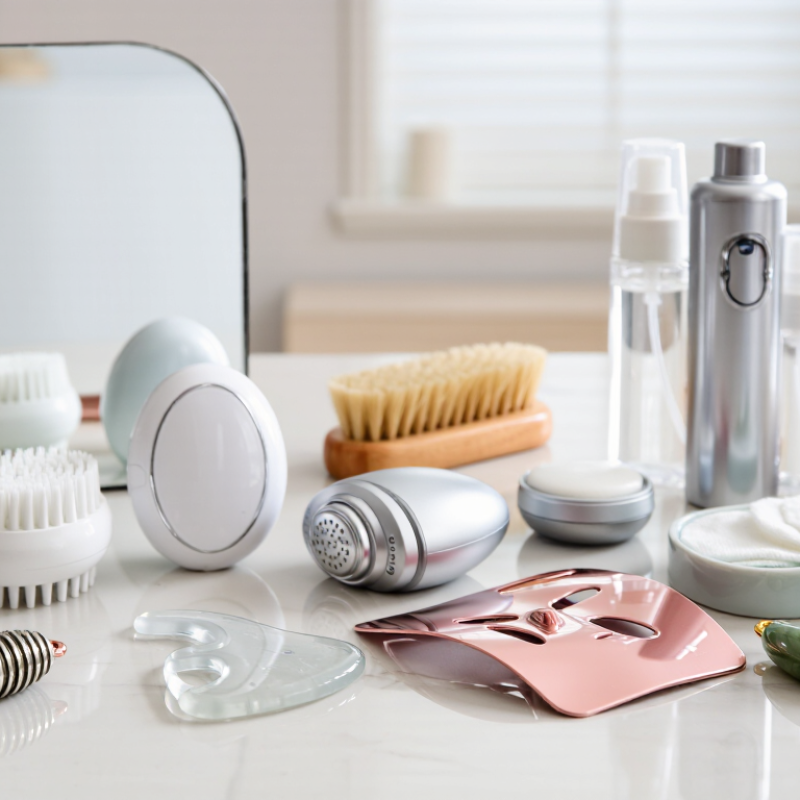
Consumer demand is moving toward practical, repeatable tools rather than complicated salon-style systems. The leading ten categories include cleansing brushes, LED masks, microcurrent devices, radio-frequency tools, ultrasonic spatulas, cooling rollers, facial massagers, eye-care devices, scalp stimulators, and skin-analysis tools. Buyers often compare safety features, battery life, waterproof design, replacement costs, and visible results. Short videos influence discovery, but reviews and professional explanations influence trust.
Long-term skincare investment requires realistic expectations. A device may support cleansing, temporary firmness, or product absorption, but it cannot replace sunscreen, sleep, or medical treatment. Experience shows that simple tools are used more consistently. That matters. However, consumer surveys can overstate purchase intention, and sales data may include promotional spikes. I would therefore examine repeat purchases, return rates, and usage frequency before judging market strength. Future growth may remain healthy, but price sensitivity and stronger safety standards could slow the pace.
Choosing China’s top beauty tools for long-term skincare investment requires more than comparing prices or promising advertisements. Check the NMPA category carefully. A tool making medical or therapeutic claims may require a different registration class than a household beauty device. Class I, II, and III classifications indicate different levels of regulatory oversight, but registration does not guarantee dramatic results. Verify the product status through official records.
Clinical evidence should guide expectations. Look for controlled studies, clear treatment settings, measurable endpoints, and follow-up periods longer than a few weeks. Before-and-after photos can help, but they often hide lighting, product use, or inconsistent skin conditions.
Real value also includes replacement heads, charging parts, cleaning time, consumables, and possible professional consultations. A cheaper tool may cost more after two years. Skin comfort matters too. Irritation can cancel out the intended benefit.
Tips: Write down the purchase price, monthly running cost, expected lifespan, and cleaning routine. Test frequency gradually, especially if your skin is sensitive. Keep receipts and registration details. Small records improve judgment.
I prefer tools that fit real routines, not crowded bathroom drawers. Still, convenience is not proof of effectiveness. My own evaluation could miss long-term changes, so independent clinical evidence deserves more weight than personal enthusiasm. The best investment remains uncertain until safety, evidence, and total ownership cost align.
This ranking compares 12-month cost, realistic usage, and evidence strength. Prices use China retail estimates, including basic replacement parts. Grand View Research’s 2024 home-use beauty devices report shows continued market growth, but popularity is not proof. iiMedia Research’s 2024 China beauty-device report also highlights strong consumer interest in multifunctional tools.
LED ranks higher because peer-reviewed reviews in Dermatologic Surgery report potential benefits for acne and skin rejuvenation. Results still depend on wavelength, dose, and regular use. RF and microcurrent devices appear promising, but long-term home-use evidence remains uneven. That matters.
A 12-month budget changes the decision. The cheapest tool may be used daily, while an expensive device may sit untouched. Consumer reports often measure purchase intent, not completed routines. My scoring therefore rewards repeatable habits, not impressive packaging. Even this method has weaknesses; device specifications and after-sales support can vary across Chinese sellers.
China’s top ten beauty tools for long-term skincare investment should be compared by technology, not appearance. LED devices use red and near-infrared light to support skin recovery. A 2023 review in Photodermatology, Photoimmunology & Photomedicine found promising results for collagen-related improvement, but study sizes remained small. Results are gradual.
RF devices deliver controlled heat to the deeper skin layers. Microcurrent uses low electrical stimulation, while ultrasound focuses on vibration and product distribution. Cooling tools can temporarily reduce puffiness and redness. Cleansing devices mainly improve surface hygiene, yet excessive use may weaken the skin barrier. The Global Wellness Institute reported that wellness spending reached $6.3 trillion in 2023, showing strong consumer interest in preventive personal care. Interest is not proof.
For a sensible top-ten selection, compare energy control, safety testing, replacement costs, and independent clinical evidence. LED suits users seeking gentle routines. RF may appeal to mature skin, but heat tolerance varies. Microcurrent requires regular use, sometimes almost daily. Ultrasound evidence is less consistent. Cooling tools feel immediate, though effects may fade within hours. The American Academy of Dermatology Association warns that home devices are generally weaker than professional treatments. That limitation matters. I would also question impressive before-and-after images, because lighting can change the result. Keep sessions short, protect the eyes, and stop after persistent irritation. A cheaper device with clearer instructions may outperform a sophisticated tool used irregularly.
Typical treatment intervals for comparing LED, RF, microcurrent, ultrasound, cleansing, cooling, and related home-care technologies.
The values represent practical planning intervals commonly used for home beauty routines. Daily-use technologies generally depend more on comfort, skin tolerance, and maintenance needs, while IPL and resurfacing-related tools usually require longer intervals. Actual schedules vary by device specifications and professional guidance.
A long-term skincare investment begins with safety, not attractive packaging. In China, check whether the device has valid NMPA registration or filing. Registration matters most when the tool claims a medical or therapeutic purpose. Match the certificate with the exact model, intended use, and operating method. A similar-looking certificate is not enough. Check the details.
IEC 60601 can provide useful evidence for medical electrical equipment safety. Review which parts apply, including electrical insulation, leakage current, and temperature control. Do not treat IEC 60601 as proof of effectiveness. It mainly addresses safety and performance risks under defined conditions. Ask for test reports from qualified laboratories. Some documents look impressive but explain very little.
Adverse-event data deserves equal attention. Search official safety notices, recall information, and reported user injuries where available. Look for repeated complaints involving burns, swelling, eye discomfort, or unexpected pigmentation. A small number of reports may reflect limited market exposure, not perfect safety. That point is easy to miss. I would also examine cleaning instructions, replacement parts, and service records before buying one of the top ten tools. Long-term value depends on safe maintenance and honest instructions. My own review process would remain cautious, because online ratings rarely reveal delayed skin reactions or poor quality control.
Industry estimates suggest annual growth near 15%–20%. Different reports count different product types. Some include simple massage tools, while others count powered devices only.
Forecasts commonly place the five-year CAGR between 12% and 18%. These projections are estimates, not guarantees. Promotional sales may make growth look stronger than it is.
Popular categories include cleansing brushes, light masks, facial massagers, and scalp stimulators. Other options include microcurrent, radio-frequency, ultrasonic, cooling, and skin-analysis devices. Simple tools may win.
A gua sha-style tool costs about RMB100 over twelve months. A facial roller costs about RMB120. Their usage scores are relatively high, but evidence remains limited.
Light-based masks receive stronger evidence scores than most listed tools. They may support acne care and skin rejuvenation. Results depend on wavelength, dose, and regular use.
No. A low-cost tool is useful only when used consistently. An expensive device may sit untouched in a drawer. That happens often enough to matter.
Check the exact model, intended use, operating method, and safety documentation. Look for valid national registration or filing when required. A similar certificate is not enough.
No. Electrical testing mainly addresses insulation, leakage, temperature, and related risks. It does not prove cosmetic effectiveness. Those are different questions.
Search for repeated reports of burns, swelling, eye discomfort, or unexpected pigmentation. Also check recalls, cleaning instructions, replacement parts, and service records. Online ratings can miss delayed reactions.
No. Devices cannot replace sunscreen, adequate sleep, or professional medical treatment. They may support cleansing, temporary firmness, or product absorption. Expect modest results.
This guide examines China’s beauty-device market through its 2024 growth trends, projected CAGR, and evolving consumer demand for at-home skincare solutions. It introduces a practical framework for identifying Beauty Tools For Long-Term Skincare Investment by evaluating NMPA device classifications, available clinical evidence, expected usage frequency, durability, and total ownership cost over 12 months. Rather than focusing only on price or novelty, the ranking considers how consistently each tool may support a realistic skincare routine.
The comparison covers LED, radio frequency, microcurrent, ultrasound, cleansing, and cooling technologies, highlighting their intended functions, evidence levels, maintenance needs, and user considerations. It also explains how to review NMPA registration, IEC 60601-related safety information where applicable, operating instructions, contraindications, and publicly available adverse-event data. The goal is to help readers make informed, safety-conscious decisions while recognizing that device performance can vary and that professional advice may be appropriate for specific skin conditions.
