China’s beauty-tool market is bringing spa-inspired skincare into ordinary bathrooms. A warm towel, a clean mirror, and ten quiet minutes can change the experience. Yet impressive packaging does not guarantee safer or better results. This guide explores China’s Top 10 Beauty Tools For Spa-Like Skincare Treatments At Home, focusing on practical use, material quality, skin compatibility, and realistic expectations.
Dermatologist Dr. Dendy Engelman offers a useful reminder: “More is not always more when it comes to skincare.” That principle matters when comparing cleansing brushes, LED masks, microcurrent devices, gua sha tools, facial steamers, ice rollers, silicone masks, scalp massagers, ultrasonic spatulas, and nano-mist sprayers. Each tool serves a different purpose. A soft silicone brush may support gentle cleansing, while an LED device requires careful attention to instructions and eye protection. A gua sha tool should glide over moisturized skin, never drag across dryness.
Small details matter. Clean the tool after use. Avoid sharing it. Check charging safety and product labeling. Patch-test new products before pairing them with devices. Sensitive, injured, or recently treated skin may need professional advice first. Results can also be subtle.
That is the honest part.
A home routine will not reproduce every benefit of a licensed spa treatment. It can still make skincare more consistent, comfortable, and deliberate. Some tools may become forgotten in a drawer. Others may earn a permanent place beside the cleanser. This introduction examines which options deserve that space, and where enthusiasm should pause for evidence, safety, and skin-specific judgment.
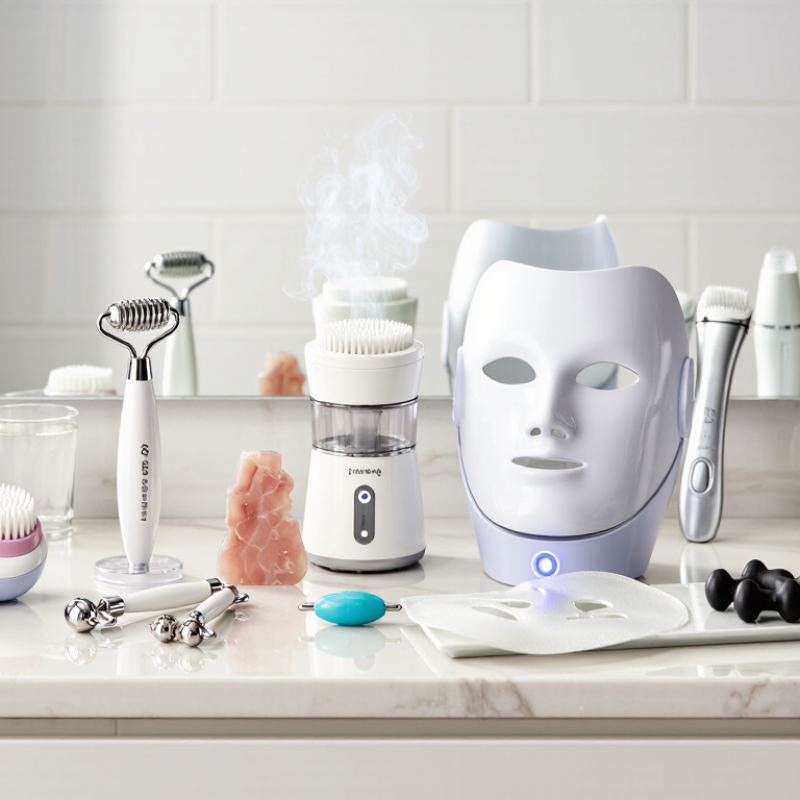
China Top 10 Beauty Tools For Spa Like Skincare At Home?
What Defines a Spa-Quality Home Skincare Tool?
A spa-quality home skincare tool should feel controlled, clean, and comfortable against the skin. It should offer clear settings, stable contact, and an easy-to-hold shape. Stronger is not always better. Gentle consistency usually supports a more realistic routine.
Look for materials that are simple to disinfect and surfaces without hidden gaps. A tool should also include understandable instructions, safety limits, and maintenance guidance. Temperature, vibration, or light settings must remain predictable during use. If the device causes sharp heat, tingling, or lasting redness, stop using it. People with sensitive skin should test a small area first and follow professional advice when necessary.
Tips: Clean the tool before and after each session. Use it on freshly cleansed skin, unless the instructions say otherwise. Keep sessions short at the beginning. Take a photo under the same bathroom light each week. This helps you judge changes more honestly. Avoid comparing results with heavily edited images.
The spa feeling also comes from usability. A quiet motor, soft edges, and a timer can make careful treatment easier. However, even a well-designed tool cannot replace sleep, sunscreen, or basic cleansing. That part is less exciting. A common mistake is expecting visible results after one use. Skin often responds slowly, and personal routines may need adjustment. Even careful users can apply too much pressure. Recognizing that weakness leads to safer, more reliable use.
| No. | Beauty Tool | Spa-Like Function | Main Technology or Material | Typical Home-Skincare Benefit | Recommended Use | Safety Consideration | Spa-Quality Defining Feature |
|---|---|---|---|---|---|---|---|
| 1 | LED Facial Mask | Hands-free light-based facial care | Red and near-infrared LEDs; some models also include blue light | Red light is commonly used to support a more even-looking complexion and the appearance of fine lines; blue light is used in blemish-focused routines | Usually 10–20 minutes per session, according to the device instructions | Use eye protection when instructed; avoid use with light-sensitive conditions or medications without professional advice | Even light coverage, controlled energy output, comfortable fit, and an automatic timer |
| 2 | Facial Steamer | Warm mist preparation before cleansing or masking | Heated water reservoir and fine-mist nozzle | Softens surface buildup and provides a temporary feeling of hydration and comfort | Approximately 5–10 minutes; use before suitable skincare steps | Keep a safe distance from the face; avoid very hot steam, especially with sensitive or redness-prone skin | Stable temperature, fine mist, automatic shut-off, and an easy-to-clean water tank |
| 3 | Silicone Cleansing Brush | Gentle facial cleansing with vibration or pulsation | Non-porous silicone bristles and a waterproof motor | Helps lift sunscreen, oil, and everyday surface impurities when used with a cleanser | Once daily or several times weekly, depending on skin sensitivity | Avoid excessive pressure and prolonged use; do not share without thorough cleaning | Soft hygienic bristles, adjustable intensity, waterproof construction, and a short treatment timer |
| 4 | Microcurrent Facial Device | Low-level facial electrical stimulation for a massage-like routine | Low-intensity microcurrent delivered through conductive metal or coated contact surfaces | May provide a temporary toned or lifted appearance when used with conductive gel | Follow the manufacturer’s program, commonly a few minutes per area | Do not use with implanted electronic medical devices, during pregnancy, or over broken skin unless cleared by a professional | Consistent current delivery, clear polarity guidance, comfortable electrodes, and built-in treatment control |
| 5 | Ultrasonic Skin Scrubber | Water-assisted cleansing and gentle exfoliation | High-frequency vibrating stainless-steel spatula | Helps loosen surface debris when used on damp skin; it is not a substitute for professional extraction | About once weekly, or less often for sensitive skin | Use only on wet skin; avoid active irritation, open lesions, and aggressive scraping | Smooth rounded spatula, controlled vibration, waterproof design, and simple mode selection |
| 6 | Warm and Cool Facial Massager | Thermal massage and soothing post-skincare care | Thermoelectric heating and cooling plates with vibration | Warmth can improve comfort during product application; cooling can temporarily reduce the feeling of puffiness | 5–10 minutes as needed, using clean skin or a suitable serum | Avoid extreme temperatures and continuous contact in one spot | Fast but gentle temperature control, smooth contact surface, and automatic time limits |
| 7 | Gua Sha Facial Tool | Traditional scraping-style facial massage | Polished natural stone, stainless steel, or other smooth non-porous material | Supports a relaxing massage routine and may temporarily improve the appearance of facial puffiness | 2–5 minutes with facial oil or another suitable slip product | Use light pressure; avoid bruised, inflamed, infected, or broken skin | Smooth edges, balanced weight, easy disinfection, and an ergonomic contour |
| 8 | Facial Roller | Cooling and relaxing facial massage | One or two rotating rollers made from stone, metal, or ceramic | Provides a temporary cooling sensation and can help spread skincare products evenly | Several minutes, whenever a gentle massage is desired | Clean after every use; stop if friction, redness, or discomfort develops | Quiet rolling action, seamless joints, hygienic surfaces, and comfortable handle design |
| 9 | Pore Vacuum Cleaner | Targeted suction for surface oil and debris | Small electric pump with interchangeable suction heads | Can temporarily remove some surface oil; it does not permanently shrink pores | Infrequently and only on suitable areas, using the lowest effective setting | Excessive suction may cause bruising, broken capillaries, irritation, or swelling; avoid inflamed acne and fragile skin | Multiple controlled suction levels, smooth tips, short treatment limits, and easy filter cleaning |
| 10 | Eye Massager | Gentle pressure, vibration, warmth, or cooling around the eye area | Soft eye-contact surfaces with optional heat, air compression, or vibration | May ease the feeling of eye-area fatigue and provide a relaxing self-care experience | Approximately 5–10 minutes per session | Avoid use over eye infections, recent eye procedures, severe eye conditions, or when pressure causes discomfort | Even pressure, gentle temperature, quiet operation, adjustable programs, and a reliable auto shut-off |
What defines a spa-quality home skincare tool? A spa-quality tool should provide controlled intensity, comfortable skin contact, hygienic materials, reliable timing, clear operating instructions, easy cleaning, and appropriate safety protections. Device performance varies by model, and beauty tools should complement—not replace—professional medical or dermatological care.
It supports gentle massage and may help release facial tension. Keep pressure light. Skin should not feel sore.
A jade roller feels cool and may reduce temporary puffiness. An ice roller offers brief cooling after exercise or sun exposure. Neither replaces proper skin care.
Use it before cleansing to soften surface buildup. Keep sessions brief. Excessive heat may cause dryness or irritation.
They can remove daily residue with less friction than rough scrubs. Rinse the brush after use. Replace it if the surface cracks.
Microcurrent tools may support temporary facial toning with correct contact. LED masks use selected light wavelengths for cosmetic care. Follow safety instructions and protect your eyes when required.
It may lift surface oil with gentle suction. Strong suction can cause bruising or visible broken capillaries. Dramatic online results may involve lighting.
Rinse removable parts with lukewarm water and mild soap. Dry every groove with a clean towel. Moisture under brush heads can support microbial growth.
Never soak electrical devices. Keep them in a ventilated container, away from splashes and shared towels. I once stored a damp tool in a closed pouch, and odor appeared within days.
Stop when burning, swelling, unusual pain, or worsening redness appears. Avoid damaged skin and patch-test unfamiliar products. When instructions seem unclear, pause and seek qualified advice.
Discover how Beauty Tools For Spa-Like Skincare Treatments At Home can transform a simple routine into a relaxing, professional-inspired experience. This guide explains what makes a home skincare tool spa-quality, including safe materials, ergonomic design, gentle performance, easy cleaning, and consistent results. It introduces ten practical Chinese beauty tools, such as facial rollers, massage devices, cleansing brushes, cooling globes, steamers, and light-based tools, while describing their main skincare functions.
You will also learn how to select suitable tools for different skin types and concerns, from dryness and puffiness to dullness and congestion. A step-by-step home spa routine shows how to cleanse, prepare, treat, massage, hydrate, and protect the skin safely. Finally, the guide covers essential cleaning, storage, charging, and maintenance practices to help extend tool life, prevent buildup, and keep every session comfortable, hygienic, and effective.

 Maray Beauty